Do you have a training center, school, or are you part of a collective?
We want to work with you
We provide teachers, educational programs, practice materials, and audiovisual resources.


We provide teachers, educational programs, practice materials, and audiovisual resources.
 655 674 229
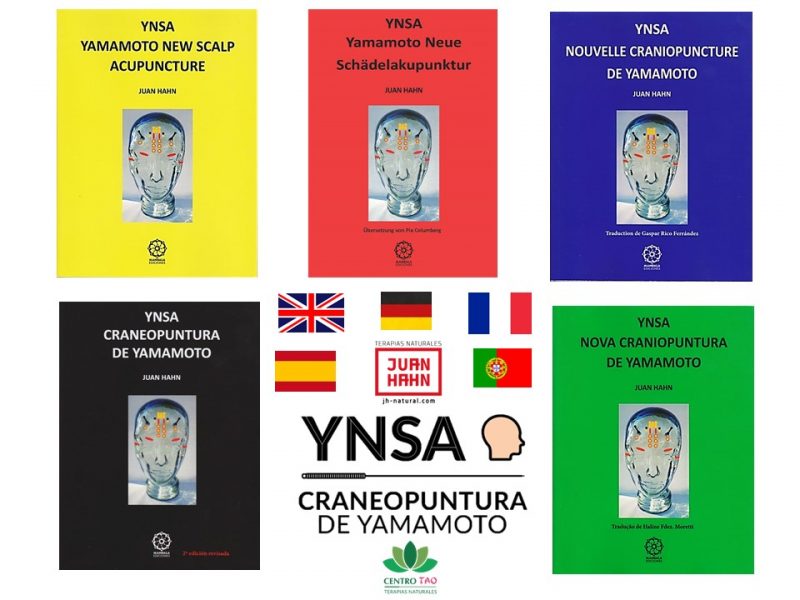



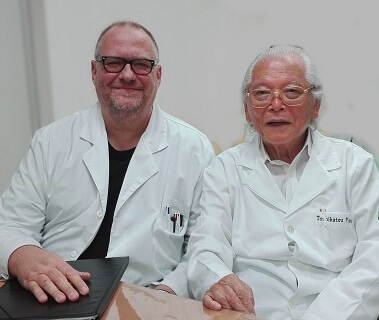
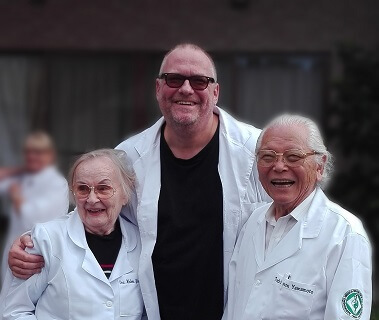
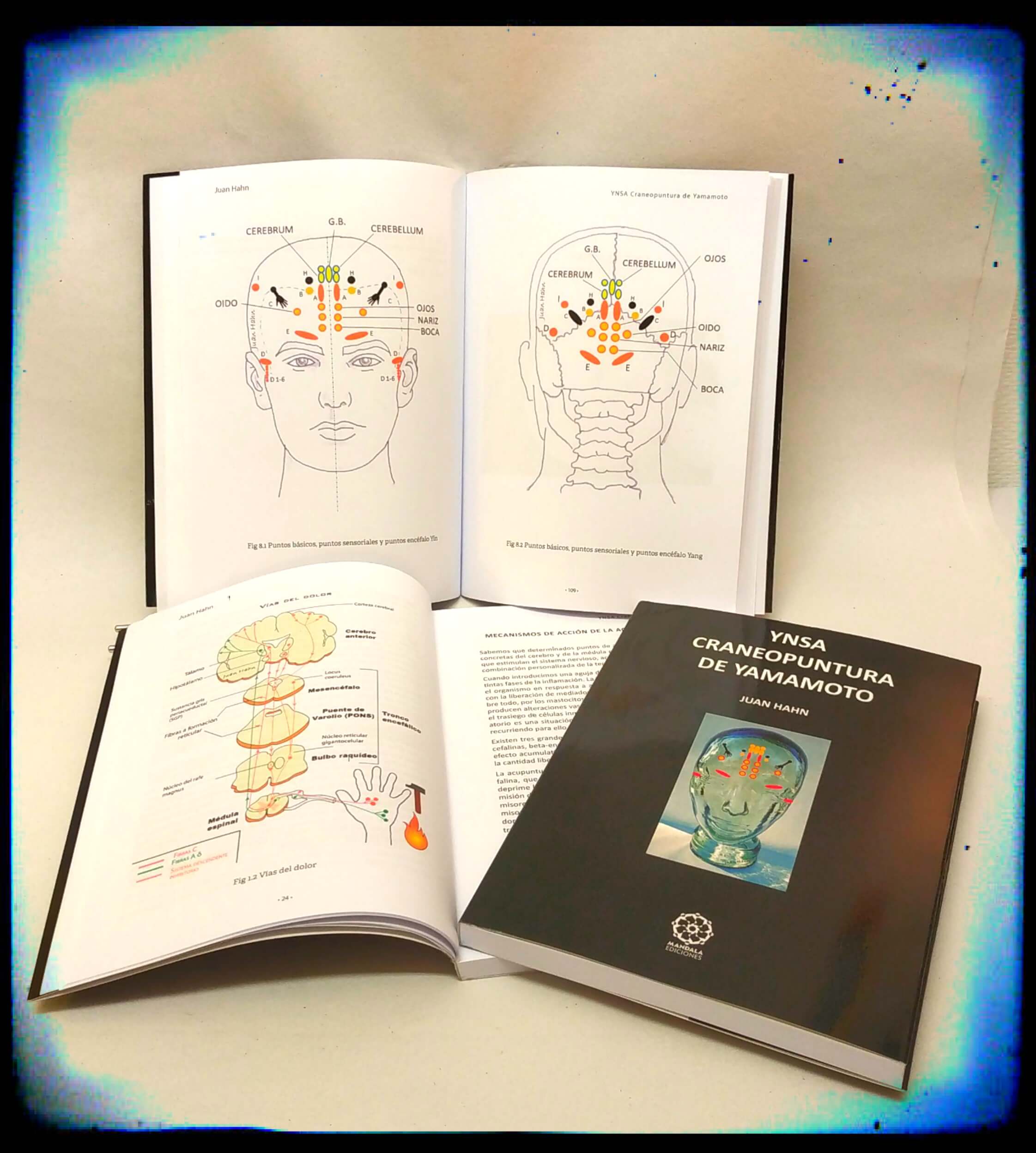
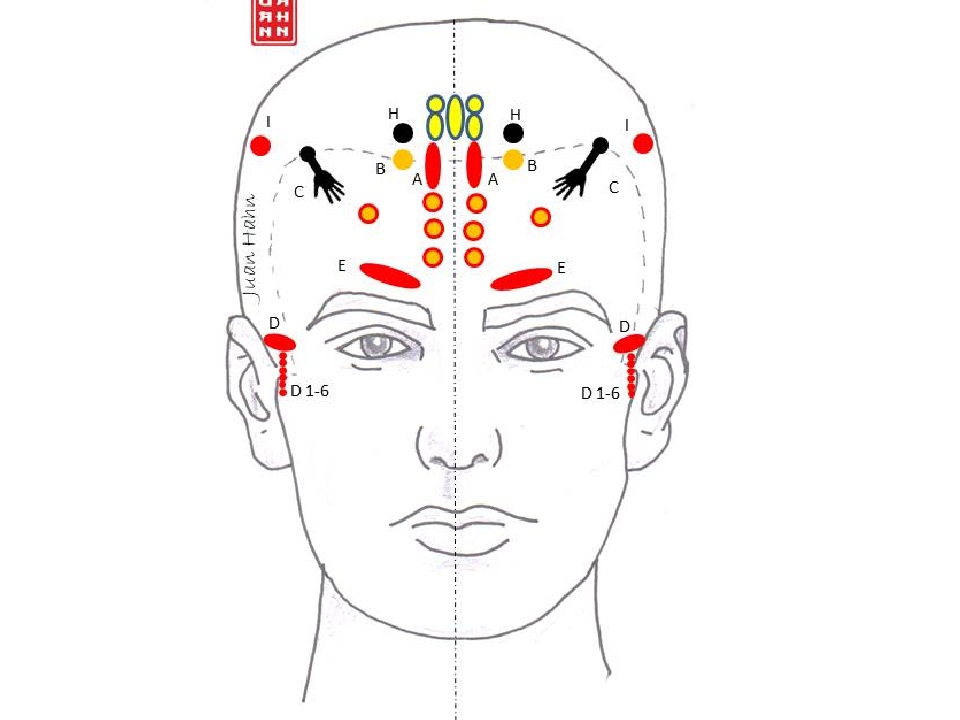
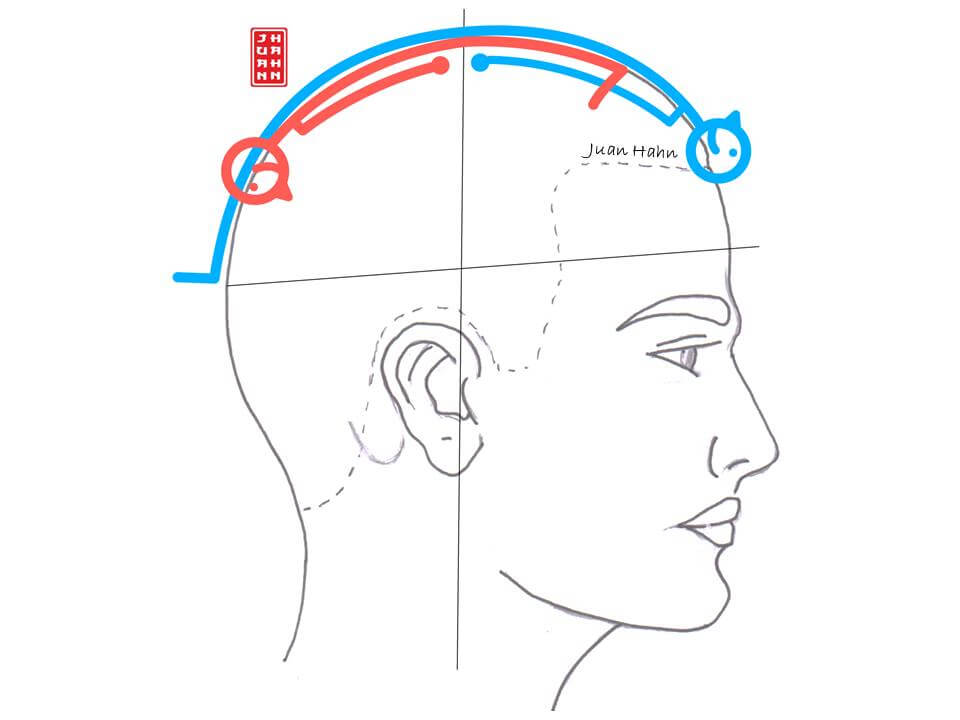
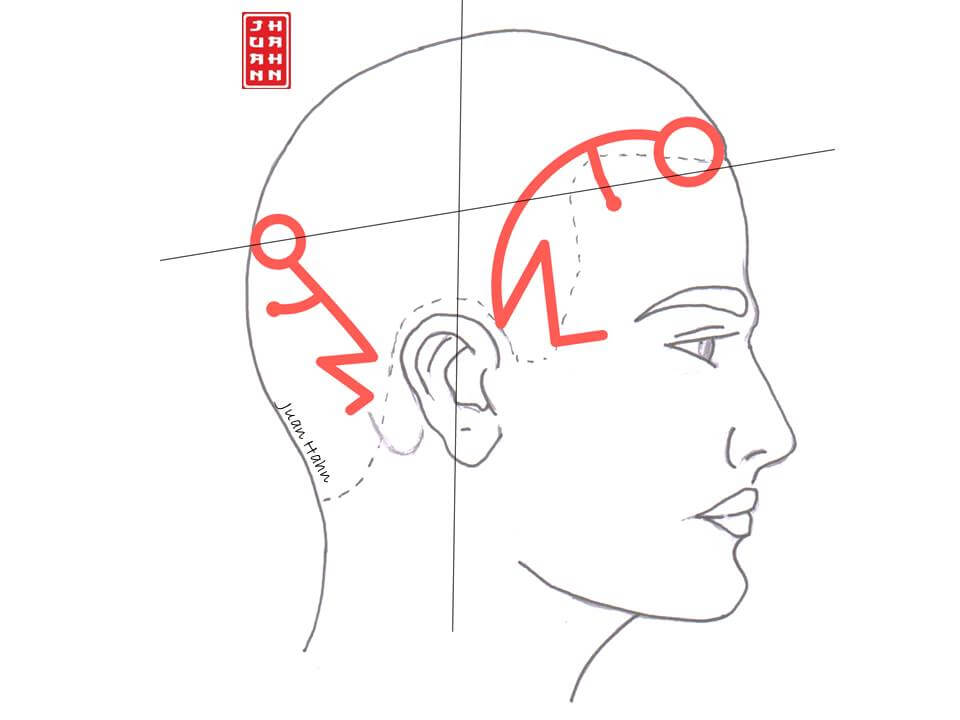
YNSA Yamamoto New Scalp Acupuncture was discovered in the 1960s and was first introduced to the world in 1973, at the Ryodoraku Congress in Osaka. Over these more than 40 years, Dr. Yamamoto has continuously worked to improve and complete the system.
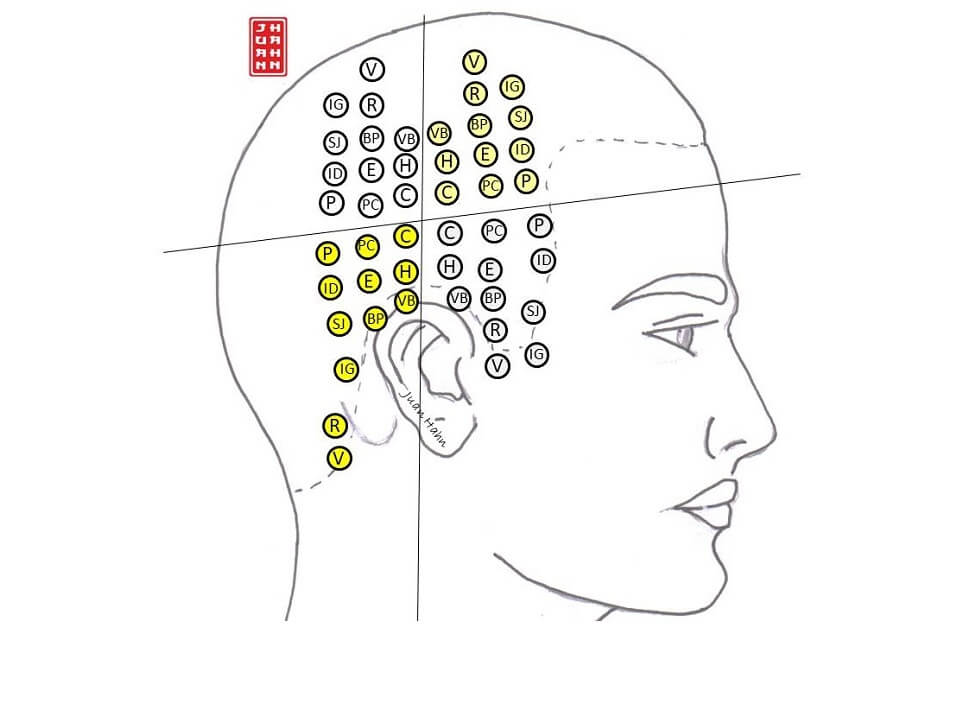
In the early ’70s, the method consisted of a single somatotopy or microsystem (correspondence between a point on the body area with a specific area of the central nervous system, organ, muscle, etc.) located on the forehead, with 5 basic points. Over the years, Dr. Yamamoto has discovered many more points, as well as other somatotopies not only on the head but also on other parts of the body. YNSA Yamamoto New Scalp Acupuncture is the 2nd most widely used microsystem worldwide, following only auriculotherapy.
The system is highly effective in treating both acute and chronic pain, as well as various neurological disorders, such as post-stroke sequelae. Additionally, it has proven to be very effective in numerous pathologies.
We offer a predominantly practical course, which is one and a half days long. It is not necessary to have a deep previous knowledge of TCM (Traditional Chinese Medicine). The only indispensable requirement is to come well-rested and with a strong desire to learn.
YNSA Yamamoto New Scalp Acupuncture was discovered in the 1960s and was first introduced to the world in 1973, at the Ryodoraku Congress in Osaka. Over these more than 40 years, Dr. Yamamoto has continuously worked to improve and complete the system.
In the early ’70s, the method consisted of a single somatotopy or microsystem (correspondence between a point on the body area with a specific area of the central nervous system, organ, muscle, etc.) located on the forehead, with 5 basic points. Over the years, Dr. Yamamoto has discovered many more points, as well as other somatotopies not only on the head but also on other parts of the body. YNSA Yamamoto New Scalp Acupuncture is the 2nd most widely used microsystem worldwide, following only auriculotherapy.
The system is highly effective in treating both acute and chronic pain, as well as various neurological disorders, such as post-stroke sequelae. Additionally, it has proven to be very effective in numerous pathologies.
We offer a predominantly practical course, which is one and a half days long. It is not necessary to have a deep previous knowledge of TCM (Traditional Chinese Medicine). The only indispensable requirement is to come well-rested and with a strong desire to learn.
Introduction, Chinese Scalp Acupuncture vs. YNSA Yamamoto New Scalp Acupuncture, the technique, basic points, sensory points, encephalon points, ‘Y’ points, cranial pairs, ‘I’ somatotopy, ‘J’ and ‘K’ somatotopies, other somatotopies, extraordinary points, tinnitus, neck diagnosis, abdomen diagnosis, arm diagnosis, diagnosis by LI 4, YNSA Yamamoto New Scalp Acupuncture and Traditional Chinese Medicine (TCM).

*Quick consultation posters 1 and 2
Introduction, Chinese Scalp Acupuncture vs. YNSA Yamamoto New Scalp Acupuncture, the technique, basic points, sensory points, encephalon points, ‘Y’ points, cranial pairs, ‘I’ somatotopy, ‘J’ and ‘K’ somatotopies, other somatotopies, extraordinary points, tinnitus, neck diagnosis, abdomen diagnosis, arm diagnosis, diagnosis by LI 4, YNSA Yamamoto New Scalp Acupuncture and Traditional Chinese Medicine (TCM).
*Quick consultation posters 1 and 2
En el curso básico de acutaping planteamos grupos muy reducidos, lo que nos permite aprovechar el tiempo al máximo, permitiendoque el alumno pueda utilizar esta técnica al día siguiente de terminar el curso. Además, hacemos especial hincapié en que el alumno entienda cómo funciona el acutaping, lo que le permitirá desarrollar su “propia manera” de aplicar esta terapia y contar con las herramientas necesarias para seguir aprendiendo y creciendo en el uso del acutaping.
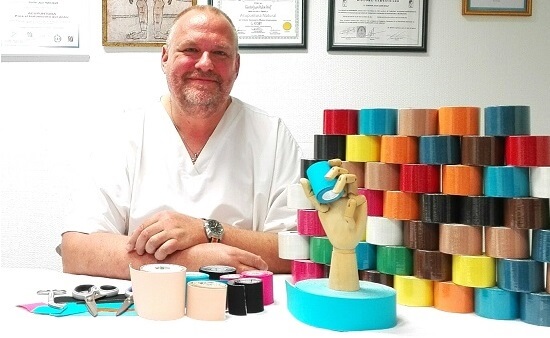
Muscular – Fascial – Space Increase – Myofascial Trigger Points (MTP) – TCM (Application of taping on acupuncture points and meridians) – Ligament Tendon – Lymphatic – Neuro Reflex.
Muscular – Fascial – Space Increase – Myofascial Trigger Points (MTP) – TCM (Application of taping on acupuncture points and meridians) – Ligament Tendon – Lymphatic – Neuro Reflex.
Acutaping is not limited to musculoskeletal use, although its most widespread application is in this area. It was used by hundreds of athletes in the London and Beijing Olympics and is currently used by high-level footballers, tennis players, etc., with significant media presence.
Acutaping is very useful in reducing pain, stabilizing ligaments and tendons, eliminating scars, treating lymphatic and blood drainage, and addressing issues such as diarrhea, constipation, menstrual discomfort, and much more.
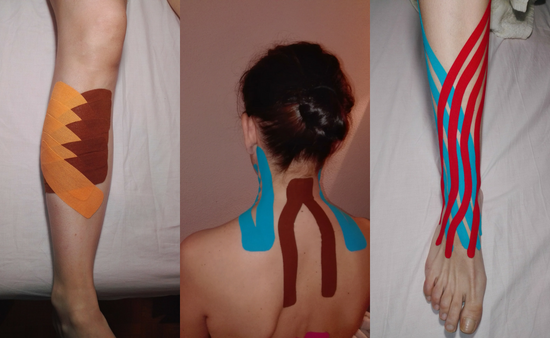
Acutaping is not limited to musculoskeletal use, although its most widespread application is in this area. It was used by hundreds of athletes in the London and Beijing Olympics and is currently used by high-level footballers, tennis players, etc., with significant media presence.
Acutaping is very useful in reducing pain, stabilizing ligaments and tendons, eliminating scars, treating lymphatic and blood drainage, and addressing issues such as diarrhea, constipation, menstrual discomfort, and much more.
Este curso está dirigido a:
Toda clase de terapeutas: osteópatas, acupuntores, kinesiólogos, fascioterapeutas o quiromasajistas. Monitores o practicantes de cualquier disciplina como pilates, masaje tailandés o Yoga, así como a personas relacionadas con el mundo del deporte, como entrenadores o cualquier otra persona que esté interesada en incorporar esta efectiva técnica, sea sanitario o no.
No es necesario ningún conocimiento previo para participar en este curso.
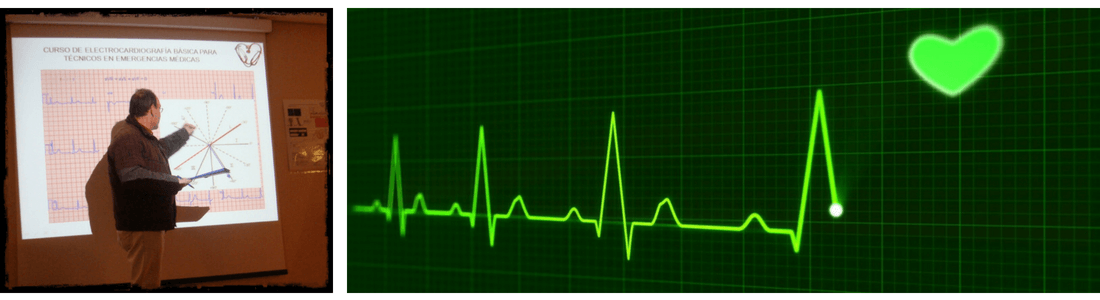
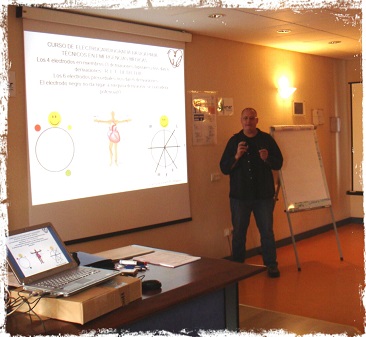
Anatomical and physiological overview of the heart – The electrocardiograph – Normal tracing (sinus rhythm) – Specific conduction system – Electrical axis – Interpretation routine – AV blocks – Branch blocks – Arrhythmias: Atrial fibrillation, ventricular fibrillation, flutter, extrasystoles, asystole, ventricular and supraventricular tachycardias, etc. – ACS – Defibrillation Cardioversion Pacemakers – Sudden death syndrome – Other pathologies – Practical cases.
Anatomical and physiological overview of the heart – The electrocardiograph – Normal tracing (sinus rhythm) – Specific conduction system – Electrical axis – Interpretation routine – AV blocks – Branch blocks – Arrhythmias: Atrial fibrillation, ventricular fibrillation, flutter, extrasystoles, asystole, ventricular and supraventricular tachycardias, etc. – ACS – Defibrillation Cardioversion Pacemakers – Sudden death syndrome – Other pathologies – Practical cases.
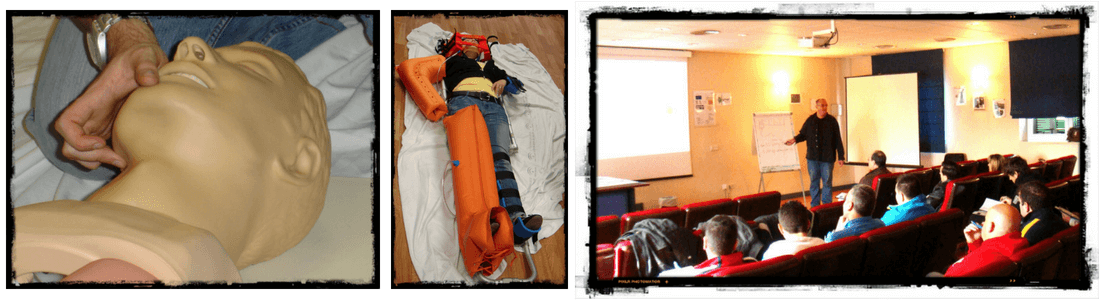
Anatomical and physiological overview: Musculoskeletal system, respiratory system, cardiovascular system, nervous system, digestive system.
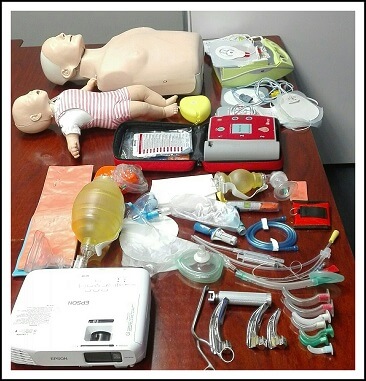
CPR maneuvers – Chain of survival – Basic life support – AED use – Airway obstruction, Heimlich maneuver, other maneuvers – Fractures, bruises, dislocations, and sprains – Skin – Wounds – Burns – Hemorrhages – Shock – Poisonings – Bites and stings from animals – Smoke inhalation – Assisting in childbirth – Trauma – Anaphylaxis – Loss of consciousness – Stroke – Myocardial infarction – Sudden death syndrome – Traffic accidents – Workplace accidents – Electric injuries – Drowning – Postural management of patients – First aid kit – Emergency action during travel – Basic Life Support in aviation – Prevention and treatment of diving accidents
Anatomical and physiological overview: Musculoskeletal system, respiratory system, cardiovascular system, nervous system, digestive system.
CPR maneuvers – Chain of survival – Basic life support – AED use – Airway obstruction, Heimlich maneuver, other maneuvers – Fractures, bruises, dislocations, and sprains – Skin – Wounds – Burns – Hemorrhages – Shock – Poisonings – Bites and stings from animals – Smoke inhalation – Assisting in childbirth – Trauma – Anaphylaxis – Loss of consciousness – Stroke – Myocardial infarction – Sudden death syndrome – Traffic accidents – Workplace accidents – Electric injuries – Drowning – Postural management of patients – First aid kit – Emergency action during travel – Basic Life Support in aviation – Prevention and treatment of diving accidents
Joseph Pulitzer, the American editor who gave his name to the famous Pulitzer Prizes.
April 10, 1847 – October 29, 1911